
PRIUS α(Prius V, Prius +) Informaton | 中古車検索・中古車情報はGTNET
スポーツカー専門 GTNET
TOYOTA PRIUS α(Prius V, Prius +) Informaton
Initially introduced at international car shows as the Prius V and Prius +, the Prius α(alpha) is now on sale in Japan!

Updated :July 21, 2011
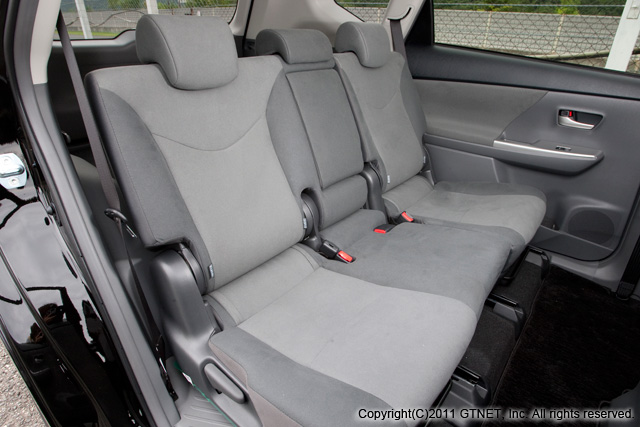
This "Minivan Prius" comes equipped with 3-row seating and room for 7 passengers! With a wide array of uses, this car is sure to be another hit.
Toyota recently introduced the Prius α, the first evolutionary model for the iconic hybrid car, the Prius. First introduced at the Detroit Auto Show in Jan 2011 as the Prius V (2-row seating, 5 person ), and as the Prius + ( 3 -ow seating, 7 passenger) at the Geneva Motor Show in March 2011, the minivan finally hit showrooms in Japan.
This model will be offered in a 3-row seat, 7 passenger configuration as well as in a more luggage-friendly 2-row 5 passenger version. The body size has increased slightly to accommodate the larger space, however, this model has managed to improve the Prius in many ways. The THS2 powertrain is the same as in the Prius, but now incorporates a lithium ion battery (3-row, 7 passenger model) which is a first for mass produced hybrid cars. This allows the car to achieve 31.0 km/L distances while having room for 7 people. GTNET obtained a Prius α and took it to the track for testing.
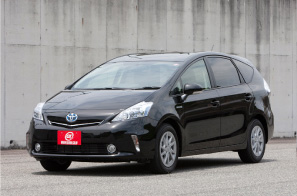
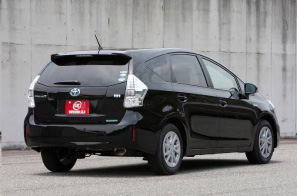
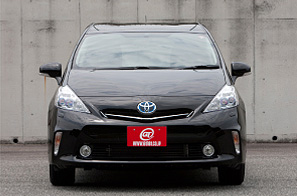
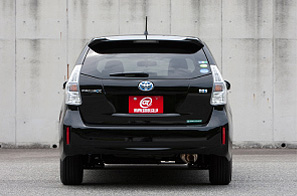
What kind of car is the Prius α?
The Prius α uses the same hybrid system (1.8 liter engine + motor) as the current model and comes in a versatile 2-row 5 passenger configuration as well as in a family orientated 3-row 7 passenger configuration.
The secret behind the explosive popularity of the Prius lies in the superb packaging of the car: Industry leading hybrid technology producing incredible fuel economy combined with comfortable roomy 5-passenger seating. However, some minivan customers said the car was too small and wanted more cargo space. The Prius α debuted as an evolutionary model that addressed these needs for more space. The overall dimensions are slightly larger than the original Prius: Length 4,615mm x Width 1,775mm, Height 1,575mm. The wheelbase was extended an extra 80mm to accommodate the third row seating and vehicle weight increased by 100-150kg. The side view resembles a low-height minivan more than a station wagon. The front and rear designs are distinctly Prius in nature. The luxurious G grade comes in 5 and 7 passenger configurations while the standard S grade only comes in 5 passenger versions. Exterior differences between the two grades are minimal, however, the touring models come equipped with sporty 17 inch wheels. Prices range from 2,350,000yen for the base S grade "L Selection" up to 3,305,000 yen for the G grade "Touring Selection Skylight Package."
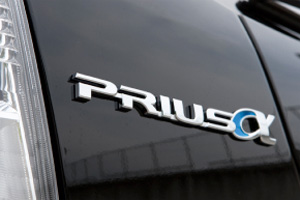
Prius Mini Catalog
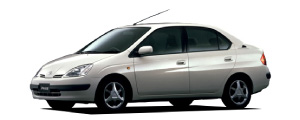
Prius 1G
Vehicle Type: NHW10/11(1997~2003)Displacement:1.5L
Max Output:Engine 76ps Motor: N/A
Fuel Economy:28.0km/h
Price:2,150,000 yen~
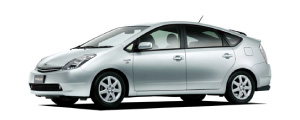
Prius 2G
Vehicle Type:NHW20 (2003~)Displacement:1.5L
Max output:Engine 77ps Motor: 68ps
Fuel Economy:35.5km/h
Price:1,890,000 yen~
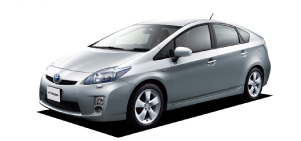
Prius 3G
Vehicle Type:ZVW30 (2009~)Displacement:1.8L
Max Output: Engine 99ps Motor: 82ps
uel Economy:38.0km/h
Price:2,050,000 yen~
●FRONT & REAR
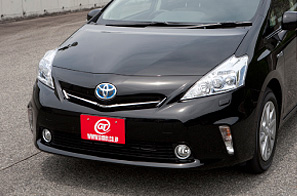
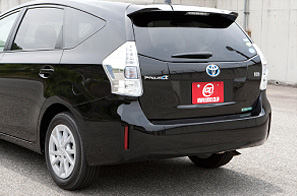
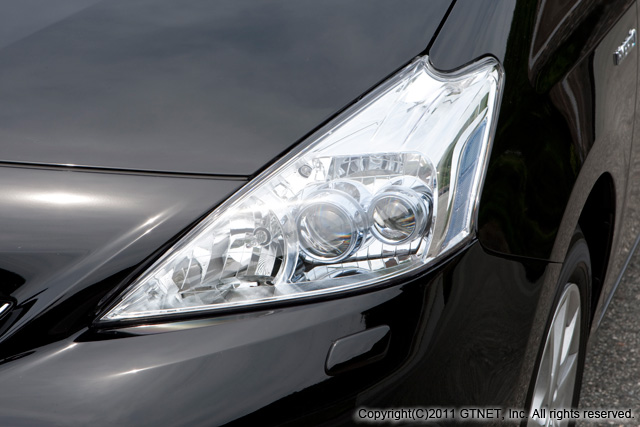
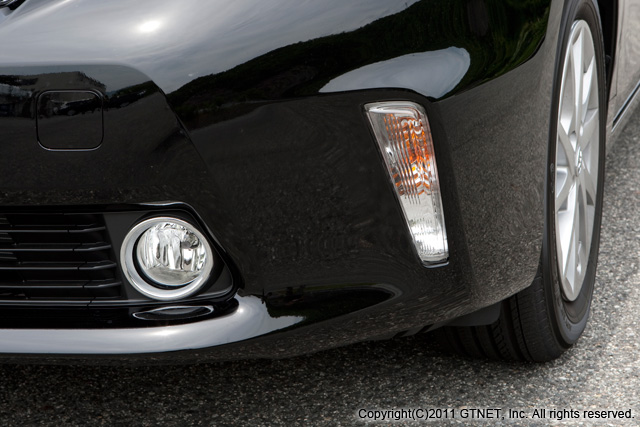
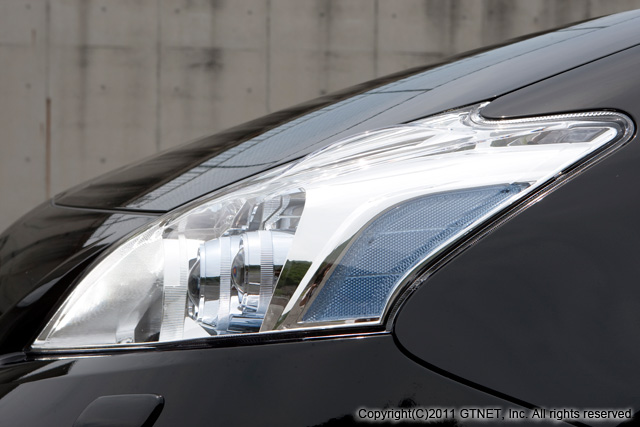
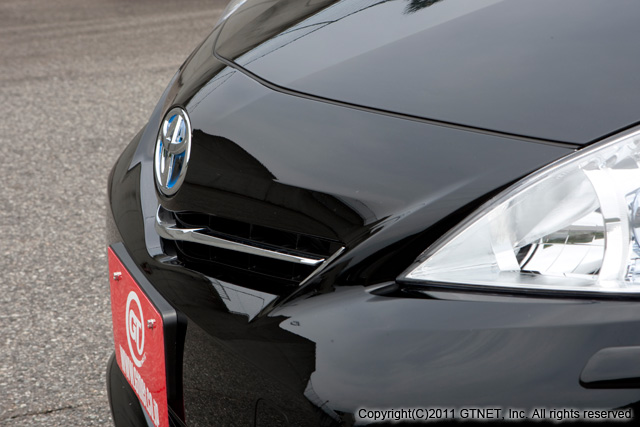
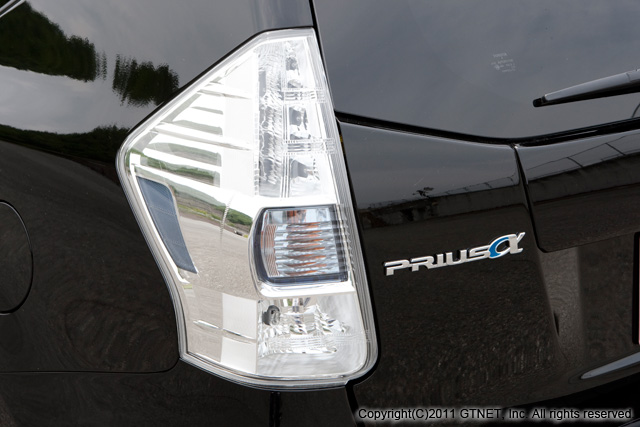
"Bigger" is the first impression of this car. Despite the familiar looking front face of the car, all of the exterior parts of the car have been designed exclusively for the Prius α. The headlights, bumper, hood, and center emblem all work together to create a dynamic and refreshing design. G grade models come with LED headlights while all other models (except the S grade Touring Selection) come with halogen bulbs. Cd is top class level at 0.29.
GALLERY
●INTERIOR
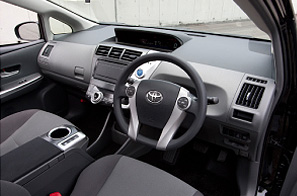
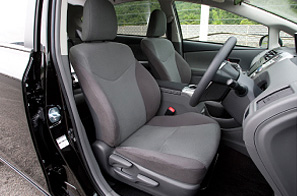
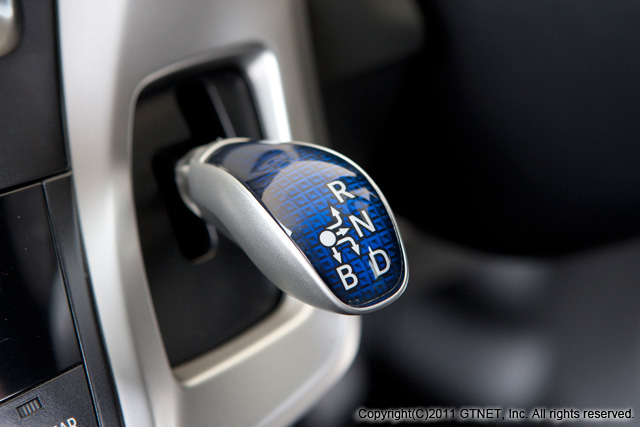
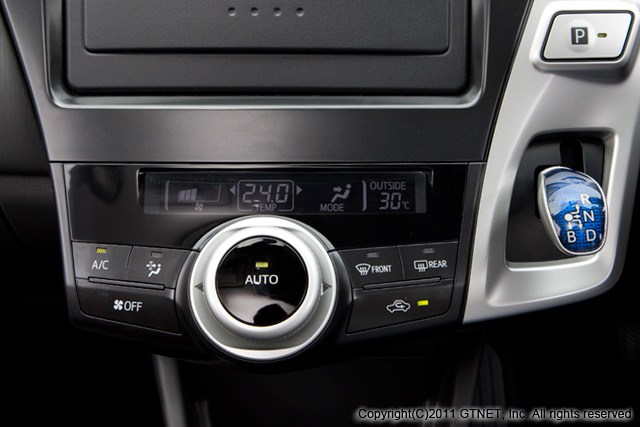
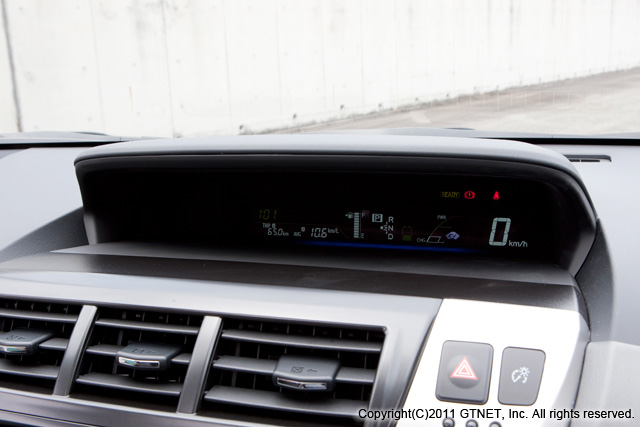
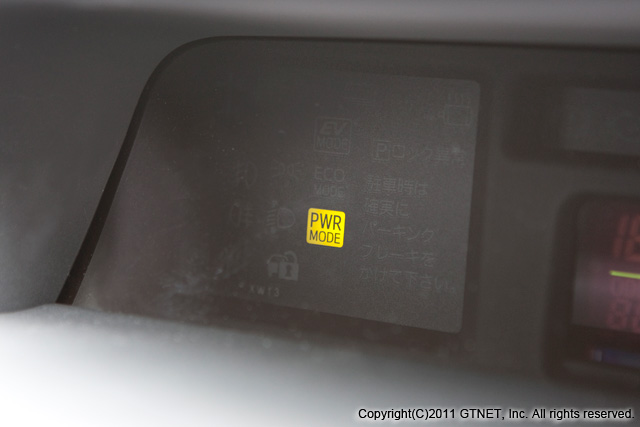
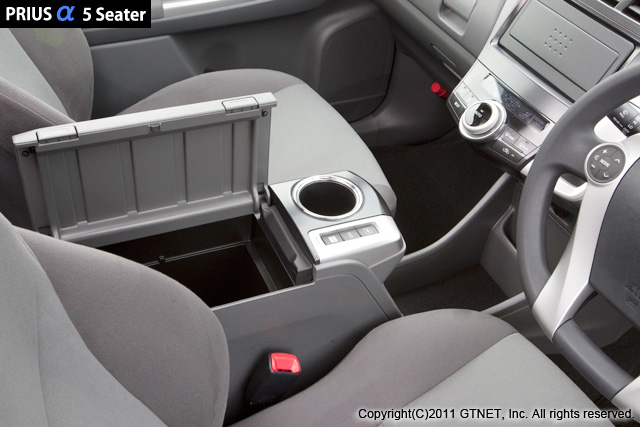
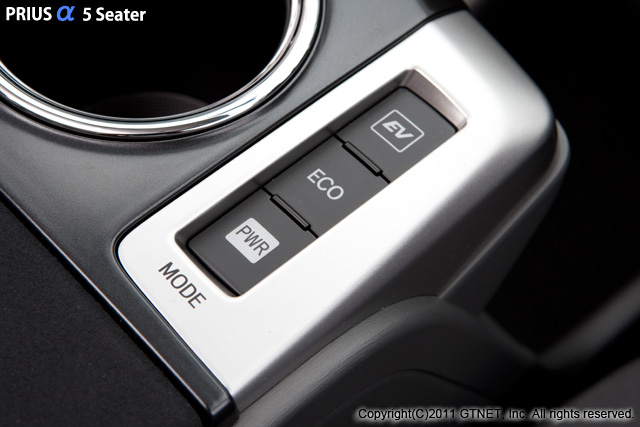
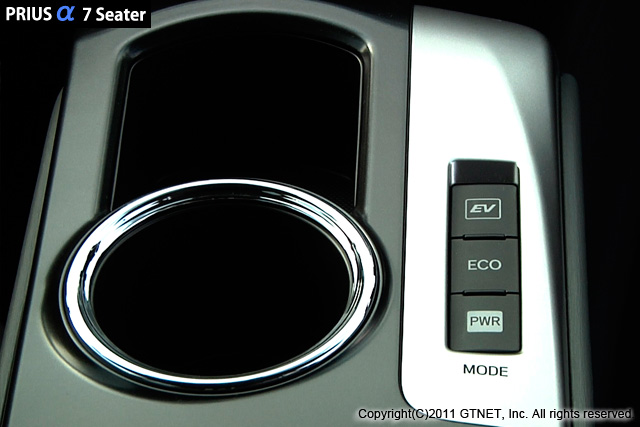
The interior dashboard, including meter design, was designed exclusively for the Prius α. The center cluster design was carried over to produce the roomy and spacious cabin feel. The advanced one-dial air conditioning system allows control of temp, fan speed, and air vent selection. The energy monitor included in all previous Prius models has been moved into the navigation screen menus, while the hybrid indicator relays vital energy information to the driver. 3 driving modes (ECO/ PWR/ EV) and the electro shiftmatic selector carry over from the Prius. Seating is 30mm higher than the Prius allowing a higher vantage point. Headroom is also higher for a spacious feel.
GALLERY
●ENGINE
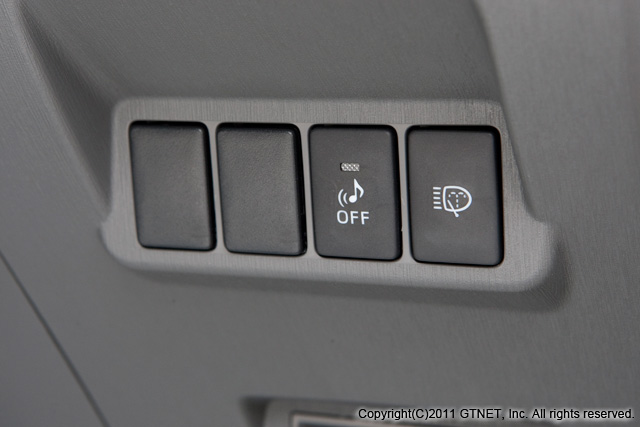
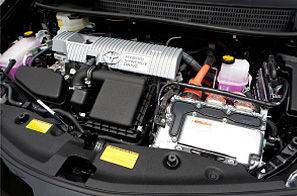 The engine is the same THS2 as in the Prius. The 4-cylinder 1.8l gasoline engine produces 99 PS, the electrical motor produces 82 PS for combined total of 136 PS. There were no major changes besides water-cooling the electrical motor. The 5 seat models come with the current nickel metal hydride batteries, while the 7 seat models come with an industry first lithium ion battery. The transmission uses the same system as in the Prius but the final gear has been changed to 3.703 (Prius 3.498) to accommodate the increased vehicle weight allowing the Prius α to perform just like the smaller Prius. Fuel economy performance stands at 31.0 km/l while the JC08 Mode fuel economy stands at 26.2 km/l. This clears the 2010 fuel economy requirements by 25%. The Prius α comes equipped with a proximity sensor system and also emits an external vehicle sound up to 25km/h during electric mode to warn nearby pedestrians.
GALLERY
●BAGGAGE SPACE
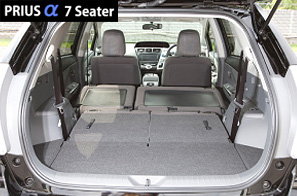
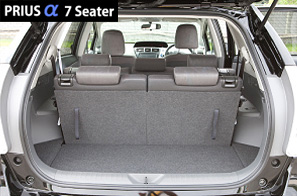
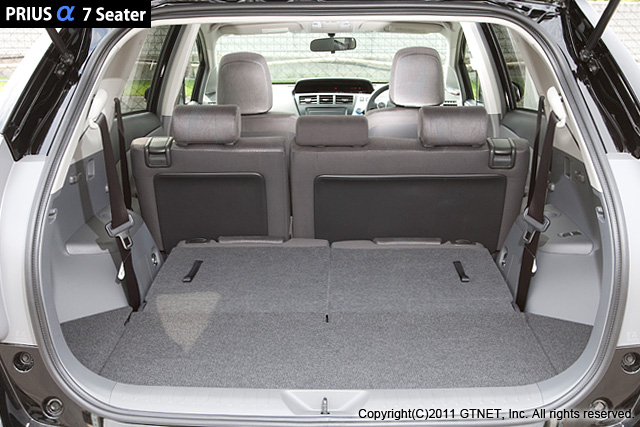
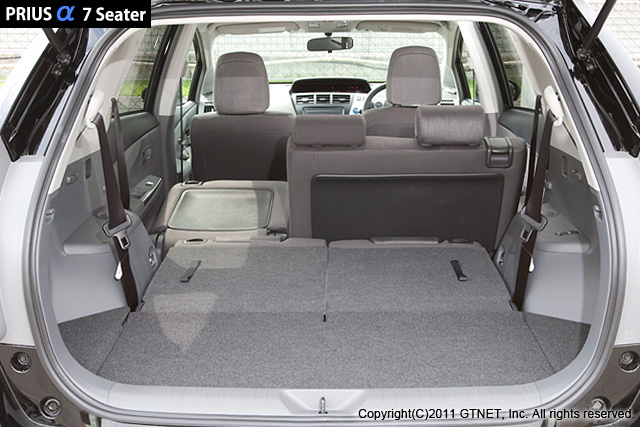
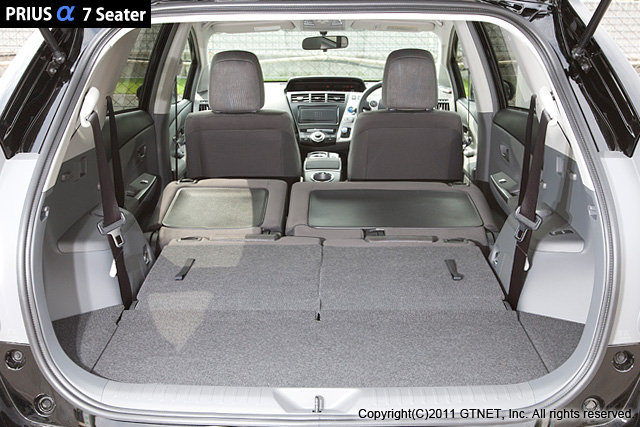
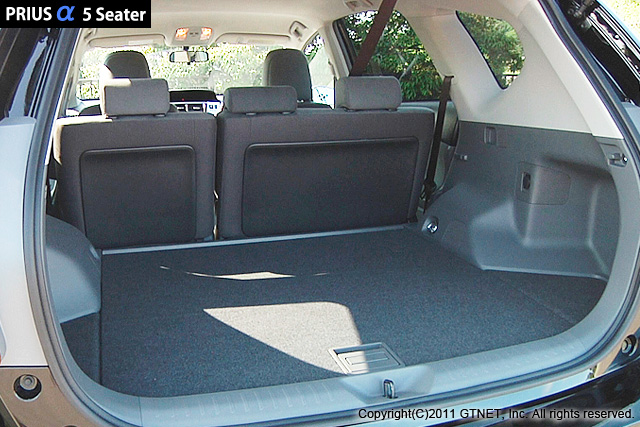
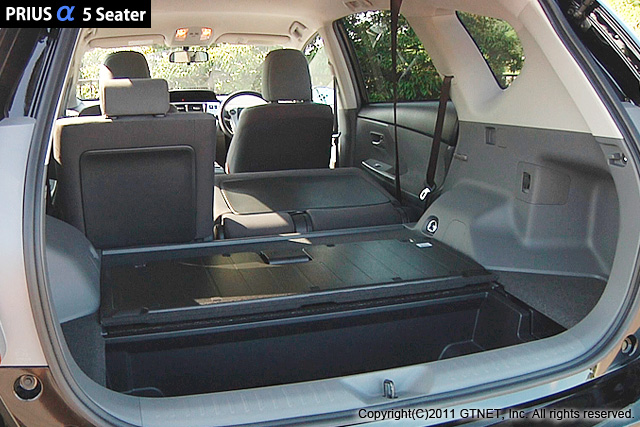
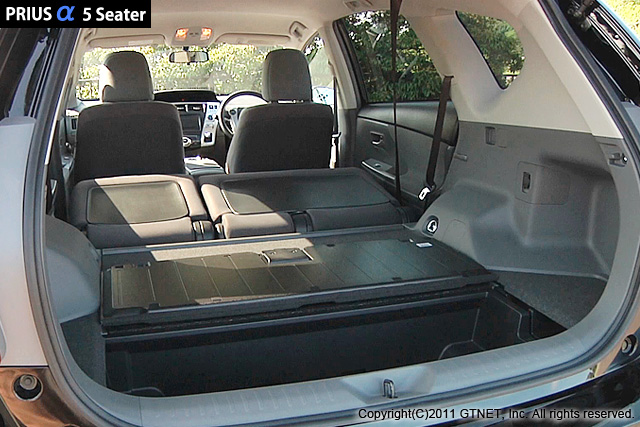
The cargo space for the 5 passenger Prius alpha has 533 liters of space that is 195 liters more than the Prius. An extra 1850mm of flat flooring is made possible by lowering the 6:4 ratio second row of seats. This is perfect for long items and lots of baggage. The spare tire has been removed in favor of more cargo space underneath the floor. A flat tire repair kit replaces the spare tire. Lowering the 5:5 ratio third row seats produces the same amount of cargo space as the 5 seat model.
GALLERY
●BATTERY
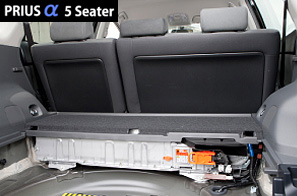
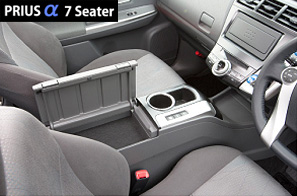
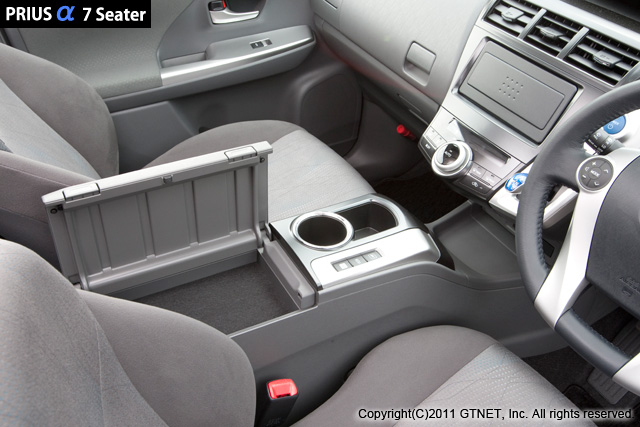
The battery is the main difference between the 5 and 7 passenger models. The 5 seat model uses the same nickel metal hydride battery in the Prius and is located in the floor of the luggage space area. The 7 seat model uses a compact lithium ion battery located to the side of the drivers side center console. Performance is said to be the same for both types of batteries. System output and fuel economy remain the same for both models.

©2000-2024 GTNET株式会社